Miniature Golden Retrievers: what the name means
A miniature Golden Retriever isn’t a breed that Dogs Australia recognises. It recognises one Golden Retriever, in one size.
The short version
- The name. No kennel body, vet body or RSPCA page we read defines it, so it can’t tell you what a puppy is. Ask what both parents are, by breed.
- Size. Golden Retrievers stand 51 to 61 cm at the shoulder. A cross has no breed standard, so any adult size in an ad is the seller’s estimate, not a promise.
- Health. A smaller size tells you nothing about health, either way. Ask for each parent’s test results, including for a short-leg gene variant linked to spinal disc disease.
- The law. A cross is still a dog. The rules for dog ads apply to it, and so does consumer law.
- On Pet Sales Australia. “Miniature Golden Retriever” isn’t in our breed list. A cross is listed with both parent breeds named.
- This is general information, not legal or veterinary advice. Talk to your vet about any dog you’re thinking of buying. We read our sources on 10 and 11 October 2026.
Jump to how big they get, the health questions, recognised smaller retrievers or what to check before you pay.
At a glance
| Golden Retriever | Sold as “miniature” | |
|---|---|---|
| Recognised | Yes, by Dogs Australia, as part of Group 3 (Gundogs) | Not by Dogs Australia: it’s in none of its seven groups |
| Height | Males 56–61 cm, females 51–56 cm | No standard. Any size is the seller’s estimate |
| Health | For a Dogs Australia litter: hips, plus elbows and eyes for parents born after 1 January 2020 | Whatever the name, ask for each parent’s results |
| Papers | Dogs Victoria registers a litter as purebred when both parents are registered dogs of the same breed | A cross can’t go on Dogs Victoria’s purebred registers at all |
| On our site | Listed as a Golden Retriever | Not in our breed list. A cross is listed with both parent breeds named |
From Dogs Australia’s Golden Retriever standard, breed lists and registration rules, and Dogs Victoria’s fact sheet on its registers (PDF).
Is a mini Golden Retriever a real breed?
Not one that Dogs Australia recognises. The Dogs Australia breed standard for the Golden Retriever gives one height range: males 56 to 61 cm at the shoulder, and females 51 to 56 cm. It gives no weight, and it has no smaller variety.
Dogs Australia lists the breeds it has standards for in seven groups. The Golden Retriever is in the Gundogs group. None of the seven lists has a miniature Golden Retriever, a mini Golden Retriever or a comfort retriever.
When a smaller version of a breed is recognised, it has its own entry. The Dogs Australia lists include the miniature Poodle and toy Poodle, the Miniature Schnauzer and the Miniature Bull Terrier. The miniature Poodle’s standard, for example, sets its own height. The Golden Retriever has no entry like that.
What about a “purebred” miniature Golden Retriever? Dogs Victoria’s fact sheet (PDF) says its Main and Limited Registers are for purebreds: both parents are registered dogs of the same recognised breed.
A puppy from two registered Golden Retrievers is a Golden Retriever, and the standard has one size. A cross can’t go on those registers. So if a seller says a miniature Golden Retriever is purebred, or comes with papers, ask to see the papers and which body issued them.
What do sellers mean by “mini golden”?
There’s no single answer. No kennel body, vet body or RSPCA page we read defines “miniature Golden Retriever” or “mini Golden Retriever”. So sellers can use the name for different dogs, such as a Golden Retriever crossed with a smaller breed. We can’t tell you which cross a seller means, and nor can the name.
The two parent breeds tell you what it is. On Pet Sales Australia, a cross is listed that way. For example:
- Golden Retriever and miniature Poodle: a miniature Groodle
- Golden Retriever and Cocker Spaniel: a Golden Cocker Retriever.
Those are our listing names for two crosses, not a definition of “mini Golden Retriever”. Ask the seller:
- What breed is each parent? The RSPCA’s Smart Puppy and Dog Buyer’s Guide (PDF) says a responsible breeder gives you information on the parents’ background, size, breed and temperament.
- Are both parents purebred, or are they crosses too? If a parent is a cross, ask what breeds are behind it, and what records show that.
- Can I meet both parents? The RSPCA says to insist on meeting the mother, and the father if possible. That way you can see their temperament, health and welfare.
- What health tests has each parent had? The tests to ask for are below.
The RSPCA’s guide (PDF) says a refusal to answer reasonable questions should raise red flags.
What is a comfort retriever?
People also search for “comfort retriever”. Dogs Australia’s breed lists have no breed of that name. So treat the name the same way as “miniature”: ask what both parents are.
How big do mini Golden Retrievers get?
Nobody can promise. A cross has no breed standard, so any adult size in an ad is the seller’s estimate.
Start with the parents’ heights in Dogs Australia’s breed standards:
| Breed | Height at the shoulder |
|---|---|
| Golden Retriever | Males 56–61 cm, females 51–56 cm |
| Cocker Spaniel | Males are about 39–41 cm tall, and females about 38–39 cm |
| Miniature Poodle | 28 cm to under 38 cm |
| Toy Poodle | Under 28 cm |
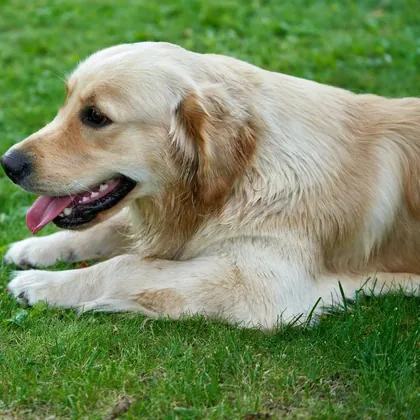
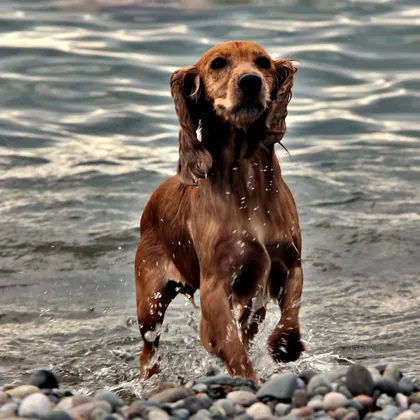
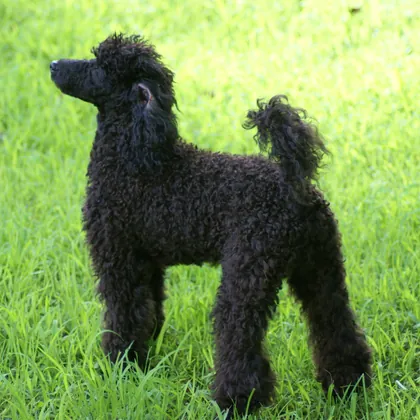

Of these four standards, only the Cocker Spaniel’s gives a weight: about 13 to 14.5 kg.
By those standards, in a cross of a Golden Retriever and a miniature Poodle, one parent stands at least 51 cm and the other under 38 cm. No standard says where their puppies will end up. So:
- Get both parents’ heights and weights, and meet them if you can.
- Ask what dogs from earlier litters grew to.
- Treat any adult size in an ad as an estimate, not a promise. Once listings open, a listing for a puppy that’s been born gives its expected adult size. That’s the seller’s own estimate, and we don’t check it.
Dogs sold as “teacup” or “micro” can’t be listed on our site at all.
Are miniature Golden Retrievers healthy?
The name tells you nothing about health, either way. It depends on the parents, and on how the puppies were bred and raised. Don’t assume a cross is healthier, or less healthy.
A 2024 UK study compared Cockapoos, Labradoodles and cavapoos with their parent breeds, using owners’ reports on 9,402 dogs. Across 57 disorders, it found no significant difference in 296 of 342 comparisons. It didn’t include Golden Retriever crosses. Its authors suggest choosing on other things, such as the conditions the dogs are bred in, their temperament, and the build and health of the parents.
Tests for a Golden Retriever parent
Dogs Australia’s registration rules (PDF) say both parents of a registered Golden Retriever litter must be screened for:
- Hips: hip dysplasia, through Dogs Australia’s Canine Hip and Elbow Dysplasia Scheme (CHEDS).
- Elbows: elbow dysplasia, for a parent born after 1 January 2020.
- Eyes: progressive retinal atrophy (PRA) and hereditary cataracts, for a parent born after 1 January 2020. A veterinary eye specialist checks within 18 months before the litter is born.
For an imported dog, the rules also accept another recognised hip or elbow scheme, if the dog was screened before arriving in Australia. Those rules cover registered Golden Retriever litters, so they don’t bind the breeder of a cross.
The tests are still open to the parents: Dogs Australia says CHEDS is open to all dogs at least 12 months old, pure bred or not. So ask for the Golden Retriever parent’s hip, elbow and eye results.
Dogs NSW also lists sub aortic stenosis, a heart condition, among the breed’s common hereditary problems. Dogs Victoria mentions DNA testing for a range of conditions. Ask which ones, by name.
Tests for the other parent
Each breed has its own list. Ask the seller which tests the breed’s club or state canine body lists, and to see the results.
- Mini or toy Poodle: Dogs Victoria says a DNA test for PRA should be completed. It names luxating patellas (unstable knees) and Legg-Perthes disease as other concerns.
- Cocker Spaniel: Dogs Victoria says PRA occurs occasionally in the breed.
The short-leg gene variant, CDDY
Some breeds carry a gene variant for short legs, called chondrodystrophy (CDDY). The Veterinary Genetics Laboratory at the University of California, Davis says the variant also causes early wear of the discs in the spine. Worn discs can herniate into the spinal canal. The lab says a herniated disc can cause severe pain and nerve problems.
One copy of the variant is enough to cause the disc changes. The lab also says several factors are thought to affect whether a disc herniates in any one dog.
The lab lists the breeds it considers appropriate for the test. They include miniature, toy and Standard Poodles, American Cocker Spaniels, Cavalier King Charles Spaniels and the goldendoodle (another name for the Groodle). It says the list isn’t complete, and that the variant has been found in mixed-breed dogs, so it recommends the test for them too.
The lab publishes how common the variant was in the dogs it has tested, in a table it updated on 16 September 2024. Its figure counts copies of the variant, not dogs: a dog can carry none, one or two. On the lab’s scale, 100% would mean every dog tested carried two copies, and 0% that none carried any.
So 61% doesn’t mean 61% of the dogs carried it:
| Breed, mostly owner-reported | How common CDDY was | Dogs tested |
|---|---|---|
| Golden Retriever | Under 1% | 100 to 499 |
| Goldendoodle (Groodle) | About 28% | 100 to 499 |
| Miniature Poodle | About 61% | 100 to 499 |
| Toy Poodle | About 60% | 100 to 499 |
| English Cocker Spaniel | About 88% | 30 to 99 |
| Nova Scotia Duck Tolling Retriever | About 35% | Over 1,000 |
These are dogs tested at one American lab, not a sample of Australian dogs. Treat the figures as a reason to ask, not as the odds for any puppy.
Whatever the smaller parent is, ask if it has had the CDDY test, and for the result. The lab reports it like this:
- N/N: no copies. The dog can’t pass the variant on.
- N/CDDY: one copy. The lab says the dog passes it to half its puppies.
- CDDY/CDDY: two copies. The dog passes one to every puppy.
The lab says to share a dog’s result with its vet.
Breeding for looks
The RSPCA opposes breeding that produces or keeps physical features that harm an animal’s wellbeing. That’s its Policy A6, clause 6.8.1, adopted 8 April 2024. Its advice to breeders (updated 4 February 2022) lists disproportionately short legs among exaggerated features.
Its Smart Puppy and Dog Buyer’s Guide (PDF) suggests asking a breeder what matters most to them in their puppies. A responsible breeder, it says, puts health, welfare and temperament above appearance.
For any puppy
- See the results, not just the word “tested”. The RSPCA says “parents DNA tested” is meaningless unless the seller gives proof, and the tests are for health problems known in that breed.
- Ask what the breeder does with the results, such as which dogs they won’t breed from. The RSPCA says a breeder should be able to tell you.
- Talk to your vet first. The RSPCA’s guide (PDF) suggests a visit before you buy, to talk through the breed or type of dog you’re considering.
- Ask whether the breeder will take the puppy back. The guide says a responsible breeder offers to take back an unwanted animal within a set time, and one with a problem from an inherited disorder at any time.
Once listings open, health tests on a Pet Sales Australia listing are the seller’s own statement. We don’t check them, so ask to see the results.
What does a mini Golden Retriever cost?
We don’t have a price to give you, and we won’t guess one. A name that isn’t a breed has no price range of its own.
- Our price ranges. Once listings open, the miniature Groodle and Golden Cocker Retriever pages will each show a range of asking prices when at least 8 listings from 3 sellers have asked a price. See how our price ranges will work.
- What’s included. The RSPCA’s guide (PDF) says to ask whether a puppy has had a vet health check, a microchip, vaccinations, and worm and flea treatment, and for the vet’s papers. A word like “miniature” in an ad isn’t one of them.
- The costs after. The RSPCA lists vaccination, microchipping and desexing up front, then food, worming, yearly health checks, vet bills and training. See first-year costs.
Scams and puppy farms
Sought-after dogs draw scammers. In a 2020 warning, the ACCC said scammers set up fake websites and ads for sought-after breeds, and usually ask for money up front. Once a buyer has paid a deposit, it said, the scammer finds new ways to ask for more.
- Golden Retriever names are used. WA ScamNet’s list of fake puppy websites (updated December 2025) names ten with “Golden Retriever” in the name or web address, dated between September 2020 and April 2022. Its advice is to meet the animal in real life before handing over any money.
- Very low prices. The ACCC’s advice: if the price looks too good to be true, it probably is. It also suggests searching the ad’s exact wording and its photos, because matching text or images on several sites point to a scammer.
- Popular labels. The RSPCA says puppy farms increasingly label dogs as designer cross-breeds and pure breeds, to cash in on how popular those dogs are.
Is it legal to sell a miniature Golden Retriever in Australia?
Selling a cross follows the same rules as selling any dog: what the ad must show, and consumer law.
What the ad must show in each state
A cross is still a dog. Most states and territories set what a dog ad must show, whatever the seller calls the dog.
- Victoria: almost always the seller’s source number and each dog’s microchip number, whether the dog is sold or given away. Animal Welfare Victoria says sellers in other states who sell to Victorians need a source number too.
- NSW: each dog’s microchip number. A puppy 8 weeks old or younger can show its mother’s instead, labelled as hers. Dogs born from 1 December 2025 also need the breeder identification number (BIN), unless the dog is 6 months or older and the BIN is on the NSW Pet Registry. A rehoming organisation that doesn’t know the breeder gives its rehoming organisation number instead.
- Queensland: for a dog born on or after 26 May 2017, the dog’s supply number, such as its breeder’s ID number.
- South Australia: the seller’s name and phone number, and each breeder’s name and phone number. A registered breeder’s Dogs and Cats Online (DACO) number goes in too.
- Western Australia: ask for the microchip number.
- Tasmania: a puppy under 12 months needs its mother’s or its own microchip number. If neither is chipped, the mother’s registration number and her council.
- ACT: licensed breeders show their breeding licence number. For other sellers, the law (Domestic Animals Act 2000) asks for the dog’s microchip number or the seller’s rehoming identifier (a state rehoming number, else their ABN, or their name if they have no ABN). The ACT Government’s page asks sellers for both.
- Northern Territory: ask for the microchip number.
From each state’s and territory’s own laws and pages, read 10 and 11 October 2026. See how to check a seller’s number, or what the ad must show in each state in our guide to where to buy a puppy.
Don’t take a puppy home before it’s 8 weeks old. The RSPCA’s guide (PDF) says puppies shouldn’t leave their mother before 8 weeks, and must be fully weaned. Tasmania’s Animal Welfare (Dogs) Regulations 2026 set 8 weeks too. In NSW, the Department of Primary Industries and Regional Development says a dog mustn’t be sold or given away until it’s over 8 weeks old.
Once listings open, a puppy’s go-home date on Pet Sales Australia must be at least 8 weeks after the date of birth the seller gives. That’s our rule in every state. We check the dates, not the puppy’s real age.
What consumer law says about breed claims
A business mustn’t mislead you. The ACCC says any claim a business makes about what it sells must be accurate, truthful and based on reasonable grounds, and that it makes no difference whether the business meant to mislead.
Two state consumer agencies say how consumer law applies to pets:
- New South Wales: the NSW Government’s buying a pet page says that if you buy a pet based on a description such as its breed, the pet must match that description.
- Western Australia: Consumer Protection (page updated 20 November 2025) says a pet should match how the seller advertised it.
Both say these guarantees don’t cover a one-off sale by a private seller. WA’s page says they’re limited when you adopt from a shelter or rescue. If you think a cross was sold to you as a purebred, your state or territory’s consumer protection agency can tell you what applies to your sale.
“Registered breeder” doesn’t settle it either. The RSPCA’s guide (PDF) says it can mean a breed club member or someone registered with a council. Being registered doesn’t necessarily make a breeder responsible, it says.
Are there small Golden Retriever breeds?
Dogs Australia has no small Golden Retriever. But it has standards for seven retrievers, and two of them are shorter: their ideal heights start below the Golden Retriever’s.
| Retriever | Height, from its Dogs Australia standard |
|---|---|
| Nova Scotia Duck Tolling Retriever | Males 48–51 cm, females 45–48 cm (ideal, over 18 months) |
| Murray River Retriever | 46–53 cm (ideal, with no separate sizes for males and females) |
| Golden Retriever | Males 56–61 cm, females 51–56 cm |
| Labrador Retriever | Males 56–57 cm, females 55–56 cm (ideal) |
| Flat Coated Retriever | Males 58–61 cm, females 56–58 cm (preferred by the standard) |
| Chesapeake Bay Retriever | Males are about 58–66 cm tall, and females about 53–61 cm |
| Curly Coated Retriever | Males 69 cm, females 64 cm (ideal) |
None of these is a small Golden Retriever. Each is its own breed, with its own coat, nature and health questions. We don’t rank breeds.
Nova Scotia Duck Tolling Retriever
Dogs Victoria calls the Toller the smallest of the retrievers.
- Size: the Nova Scotia Duck Tolling Retriever breed standard gives the ideal heights in the table. As a guide, it gives 20 to 23 kg for adult males and 17 to 20 kg for adult females.
- Coat: a water-repellent double coat of medium length, in shades of red or orange. Dogs Victoria says Tollers do shed, so frequent brushing is recommended.
- Nature: the standard describes a highly intelligent dog with great endurance that is easy to train, and can be reserved with strangers. Dogs Victoria says Tollers need plenty of outdoor exercise, and gives an average lifespan of 12 to 14 years.
- Health: Dogs Victoria says hip dysplasia, juvenile Addison’s disease and PRA may occur. It recommends an eye specialist’s evaluation and a heart exam. Dogs Australia registration doesn’t mean a Toller’s parents had a breed-specific health test (rules (PDF)), so ask the breeder.
- CDDY: the Toller is one of the breeds in the table above. Ask a Toller breeder for both parents’ results too.
Murray River Retriever
Dogs Australia’s standard for the Murray River Retriever took effect on 1 January 2022. It calls the Murray the only gundog developed in Australia. It doesn’t look like a Golden Retriever. The standard describes a stocky dog with a solid liver-coloured, curled coat. It calls the breed friendly, self-confident, highly intelligent and inquisitive.
Crosses, under their real names
- Miniature Groodle: a Golden Retriever crossed with a miniature Poodle. No one can promise a cross’s coat. Dogs NSW says Golden Retrievers shed all year. ASCIA, the professional body for allergy specialists in Australia and New Zealand, says all dog breeds cause allergies, though some shed less dander and so spread less allergen.
- Golden Cocker Retriever: a Golden Retriever and Cocker Spaniel cross. The Cocker Spaniel’s standard describes a flat, silky, feathered coat.
If it’s the breed you want, not the size, look at the Golden Retriever itself, and ask the health questions above. Listings open soon.
Adopting instead
The RSPCA encourages you to consider adopting first. Its buyer’s guide (Smart Puppy and Dog Buyer’s Guide (PDF)) says rescue groups may have puppies and dogs of specific breeds and types. Some rescue organisations focus on one breed. With an adult dog, you can see how big it is before you commit.
Once listings open, rescue groups’ and owners’ listings show here:
- Rescue and adoption, with what to ask a rescue
- Older dogs for sale, from breeders, owners and rescues
Taking a dog from an owner who’s rehoming it lets you ask lots of questions and see where the dog has lived, the RSPCA says (PDF).
Can I list a miniature Golden Retriever on Pet Sales Australia?
Not under that name: our breed list has no miniature Golden Retriever. A cross is listed with both parent breeds named.
- Listing a cross. Once listings open, a seller chooses “purebred” or “crossbreed”. For a cross, they choose both parent breeds from our breed list, and can add a common name if our list has one for those two parents, such as miniature Groodle. There’s no box to type a breed in, and “miniature Golden Retriever” isn’t in the list.
- What you’ll see. A cross’s listing shows both parent breeds. Our word check won’t publish “miniature Golden Retriever” or “mini Golden Retriever”, but other spellings can slip through.
- Can’t be listed. Our Listing Rules don’t allow “dogs and cats sold as ‘teacup’ or ‘micro’”, and our word check won’t publish listing text about “teacup” or “micro” puppies and kittens.
- The seller’s word. A listing’s breed, parents, expected adult size and health tests are the seller’s own statement. We don’t check them.
- Misleading ads. Our Terms of Use don’t allow false or misleading listings. If a listing calls a cross a purebred, or doesn’t match what the seller tells you, use “Report This Listing” on the listing or email info@petsales.net.au. See Report a Concern.
Selling a Golden Retriever cross? List it as what it is. Free to list. A one-off $9.95 ID check before your first listing. For rescues and shelters, the ID check is free once we’ve checked the organisation. Listings open soon: join the list.
Before you pay
- Meet the seller, the puppy and its mother in person before you pay anything, including a deposit. Visit where the puppy was raised, and meet the father if you can. A video is a first look, not a visit. Be wary if a seller wants a deposit before you’ve visited: see how deposit scams work.
- Be wary if the seller won’t let you visit, wants to meet somewhere else, or offers delivery. The RSPCA’s guide (PDF) lists each as a warning sign.
- Look up the seller’s number on the state’s own register, where there is one. Our source number page shows how.
- Pay only into an account in the seller’s name, and only if your bank says the name matches (how). If your bank can’t check names, pay in person, once you’ve met the seller and the puppy. A matching name rules out one common trick, but doesn’t make a payment safe.
- Never pay a seller for transport, crates or insurance. These are common scam fees. If you need transport, book it yourself.
- Never pay by gift card, cryptocurrency or a money transfer service such as Western Union, whatever reason the seller gives.
Pet Sales Australia doesn’t hold or protect payments between buyers and sellers. You pay the seller directly, and we can’t get your money back. If you think you’ve paid a scammer, call your bank straight away, then see what to do next.
What we check, and what we don’t
Every seller must pass an ID check before a listing goes live. It doesn’t prove the seller is honest or owns the puppy, that the puppy exists or is healthy, or that the person messaging you is the one we checked. Where Victoria’s rules apply, we check the seller’s source number on the Pet Exchange Register: whether it’s active, and its valid-until date.
That check doesn’t show whose number it is. Dog listings will show the date of our last check. So look the numbers up yourself, and meet the puppy and its mother in person before you pay.